How Menus, Calories & Nutrition Facts Really Work
Every day, millions of Canadians search for "menu calories" or "nutrition facts" before ordering. However, most people don't realize that the numbers on a menu are estimates, not exact science. Misunderstanding these numbers is a leading cause of frustration in healthy eating.
This guide explains how restaurant nutrition actually works in Canada in 2026, the new laws governing what you see, and how to eat smarter without the stress.
Quick Answer:
- Calories = Energy: They measure fuel, not necessarily "healthiness."
- The "High In" Rule: As of January 1, 2026, new federal laws require many prepackaged foods (and some restaurant items) to display a magnifying glass symbol if they are "High in" Sodium, Sugar, or Saturated Fat.
- Accuracy: Menu calories are calculated using databases, not lab-tested for every plate. Expect a 10–20% margin of error.
- Quality Over Quantity: A low-calorie meal can still be "empty," while a high-calorie meal can be nutrient-dense.
Who This Guide Is For
This guide is for you if you:
- Track macros or calories for fitness goals.
- Manage conditions like diabetes orhypertension.
- Are curious why a "salad" sometimes has more calories than a burger.
- Want to understand the new 2026 Health Canada labeling symbols.
1. What Are Calories?
- Calories are simply a unit of energy. Think of them as the "fuel gauge" for your body.
- The Science: 1 calorie is the energy needed to heat 1g of water by 1°C.
- The Usage: Your body burns these units just by existing (breathing, thinking, heart beating) and through movement.
- The Math: If you eat 600 calories, your body has 600 units of energy to use. If it doesn't use them, it stores them for later (as glycogen or fat).
2. What Is Nutritional Value?
Nutritional value is the quality of the fuel. Two 500-calorie meals can do very different things for your body.
| Nutrient | Purpose | 2026 Context |
|---|---|---|
| Protein | Build & repair tissue. | High-protein diets are trending in 2026 for metabolic health. |
| Carbohydrates | Primary energy source. | Focus is shifting to "complex" carbs vs. refined sugars. |
| Fats | Brain health & hormones. | Saturated fats are now strictly flagged by Health Canada. |
| Micros | Vitamins & Minerals. | Essential for immunity and long-term disease prevention. |
3. How Are Nutrition Facts Calculated?
Restaurants do not have a laboratory in the kitchen. Instead, they use Nutrient Analysis Tool (like Menuo).
- Database Matching: Every ingredient (e.g., 100g of Atlantic Salmon) is matched to a standardized nutritional profile.
- Recipe Weights: The exact weight of every component is added up.
- Cooking Factors: Adjustments are made for oil absorption (frying) or moisture loss (grilling).
- Why it varies: A chef might add an extra tablespoon of oil or a larger slice of cheese than the "standard" recipe dictates, causing the actual calories to differ from the menu.
4. Canada Food Labeling Laws (2026 Update)
Canada is currently undergoing the biggest labeling shift in decades.
- Front-of-Package (FOP) Symbols: As of January 2026, most prepackaged foods sold in Canada must display a magnifying glass symbol if they exceed 15% of the Daily Value for Sodium, Sugars, or Saturated Fat (Source: Health Canada).
- Restaurant Rules: In provinces like Ontario (under the Healthy Menu Choices Act), chains with 20+ locations must display calories prominently on all menus and apps.
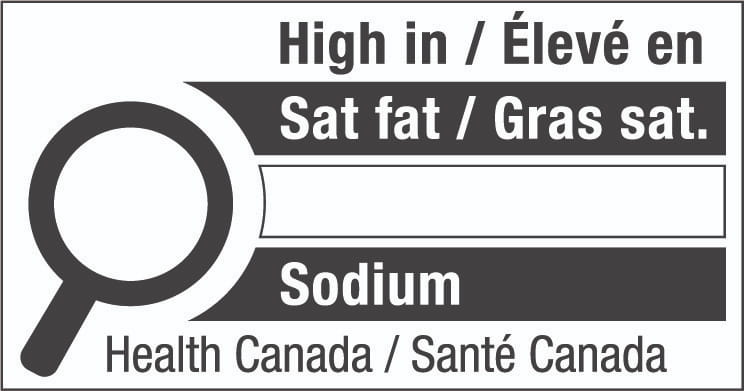
Image Credit: Health Canada
5. Allergen Labeling in Canada
- Safety is the priority. The Canadian Food Inspection Agency (CFIA) mandates the disclosure of the "Priority Allergens":
- The List: Milk, eggs, peanuts, tree nuts, soy, wheat, fish, shellfish, sesame, mustard, and sulphites.
- 2026 Tech: Many restaurants now use Digital QR Menus that allow you to filter the entire menu based on your specific allergy.
6. How to Read a Nutrition Table Corrected
The most common mistake is ignoring the Serving Size.
Example: A bag of chips might say "150 Calories," but the serving size is "Half the bag." If you eat the whole bag, you've consumed 300 calories.
Pro Tip: In 2026, Canadian labels are more standardized, making it easier to compare two different brands.
7. Daily Value (%DV) Explained
The %DV tells you if a serving has a little or a lot of a nutrient, based on a 2,000-calorie daily diet.
- 5% or less is LITTLE.
- 15% or more is A LOT.
- 2026 Strategy: Use %DV to "limit" things like Sodium and "increase" things like Fiber.
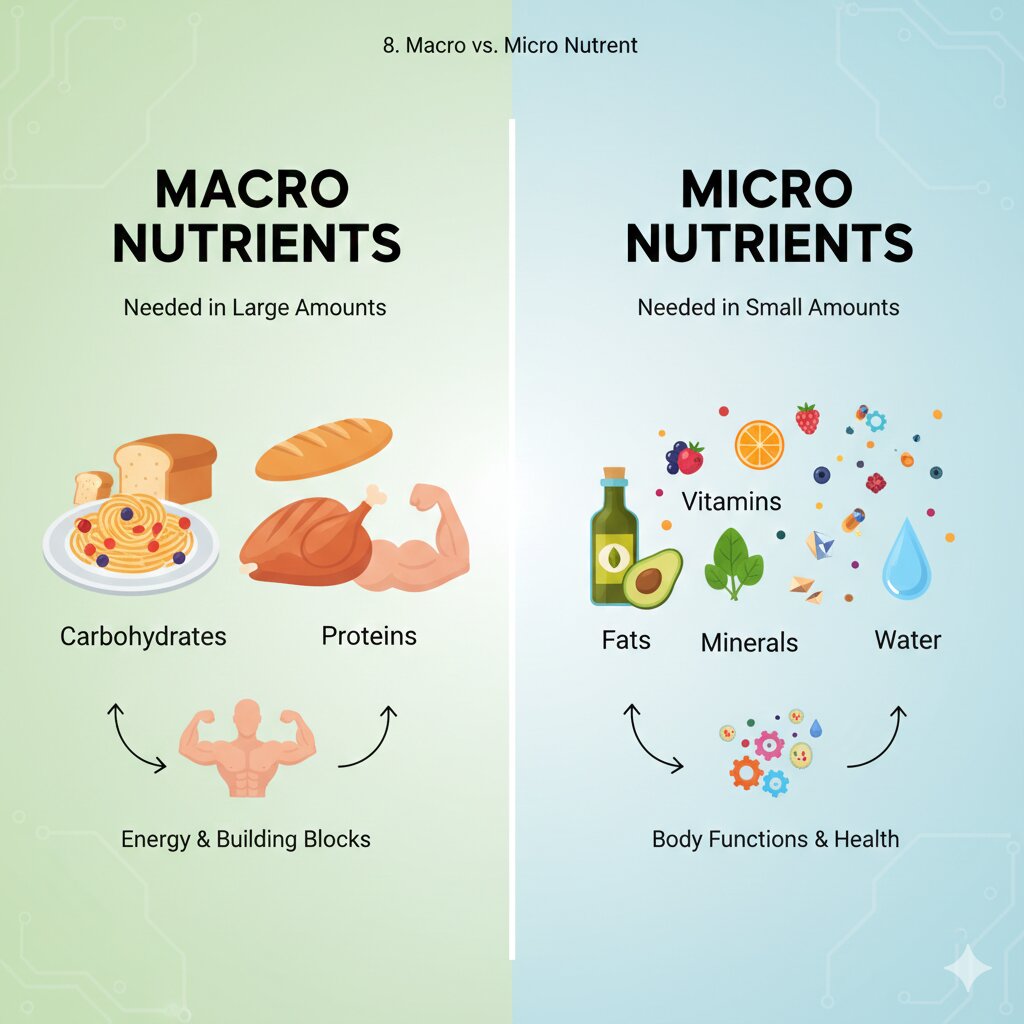
8. Macro vs. Micro Nutrients
- Macros (Grams): Protein, Carbs, Fat. These are the "Big Three" that provide energy.
- Micros (Milligrams/mcg): Vitamins and Minerals. These don't provide energy, but without them, your body's "machinery" breaks down.
9. Calories vs. Health (The 2026 Paradox)
"Low calorie" does not always mean "Good for you."
- Example A: A diet soda has 0 calories but offers zero nutrition and may trigger sugar cravings.
- Example B: An avocado has 250+ calories but is packed with heart-healthy fats, fiber, and potassium.
Conclusion: Always look at the ingredient list, not just the calorie number.
10. Empty Calories Explained
Empty calories come from foods that provide energy (calories) but very little else.
Common Sources: Sugary drinks, alcohol, highly processed snacks.
The 2026 Reality: With the new "High In Sugar" FOP labels, these "empty" foods are now much easier to spot at a glance.
11. Calorie Deficit & Weight Management
The "Golden Rule" of weight hasn't changed:
- Deficit: Burn more than you eat = Weight loss.
- Surplus: Eat more than you burn = Weight gain.
- Maintenance: Eat exactly what you burn.
Note: Stress, sleep, and protein intake also play massive roles in how your body loses or gains weight.
12. Menuo.ca Data Methodology
How do we ensure the numbers you see are reliable?
- Verified Databases: We pull from the Canadian Nutrient File and global manufacturer data.
- Standardized Servings: We normalize data so you can compare "Apples to Apples."
- Quarterly Audits: Recipes change. We update our data every 90 days to reflect seasonal menu shifts.
Explore More:
Final Thought
Information is the antidote to food anxiety. Once you understand that menu numbers are helpful guides rather than absolute laws, you can make choices that fuel your life without the guilt.
← Back to Blog